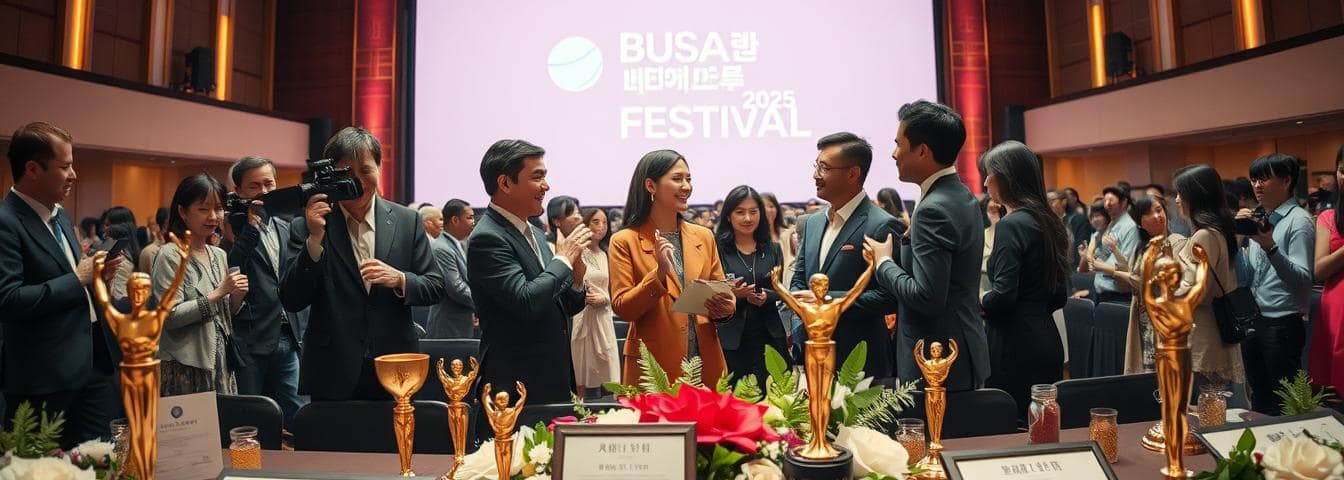
The 30th edition of a prominent Asian film festival has come to a close, marking a significant milestone with record attendances. The Busan BIFF 2025 awards ceremony highlighted the diversity and richness of Asian cinema.
A new competitive section, the Busan Award, was introduced, showcasing the best of Asian storytelling. Zhang Lu’s “Gloaming in Luomu” took the top honor, demonstrating the festival’s commitment to powerful narratives. With 329 films screened, the event was a testament to the vibrant cinematic landscape of the region.
As we analyze the New Currents winners and other award recipients, it’s clear that this year’s event was a landmark occasion in the world of cinema.
Introduction: Busan BIFF’s 30th Anniversary Significance
In 2025, the Busan International Film Festival marks three decades of showcasing Asian cinema to the world. This milestone is not just a celebration of past achievements but a testament to the festival’s enduring influence on the global film industry.
The Busan International Film Festival has grown significantly since its inception, becoming a pivotal platform for Asian filmmakers to gain international recognition. Under the guidance of its new program director, Karen Park, the festival has introduced significant changes aimed at making it more engaging and relevant to contemporary audiences.
Festival Overview and 2025 Milestone
The 30th anniversary edition of BIFF is particularly noteworthy as it introduces the Busan Award, a new category designed to create a more impactful platform for Asian filmmakers. This move is part of a broader trend in Asian cinema, where festivals are becoming crucial for showcasing regional talent.
The festival’s evolution is marked by its ability to adapt to changing cinematic landscapes while maintaining its core mission of promoting Asian cinema. The 2025 edition promises to be a landmark event, with a diverse lineup of films that reflect the current trends and innovations in the industry.
Competition Categories and Selection Process
The competition jury, chaired by Na Hong-jin and comprising industry heavyweights like Tony Leung Ka-fai and Nandita Das, oversees a rigorous selection process. The jury’s expertise ensures that the competition is credible and that the winning films are truly representative of the best in Asian cinema.
The festival features various competition categories, including the New Currents Award, which recognizes debut feature films by Asian directors. The selection process is designed to be inclusive, with a wide range of films considered for the various awards.
| Competition Category | Description | Notable Aspect |
|---|---|---|
| New Currents Award | Recognizes debut feature films by Asian directors | Focus on emerging talent |
| Feature Film Competition | Showcases a diverse range of feature films | International co-productions highlighted |
| Documentary and Short Film Categories | Recognizes excellence in documentary and short filmmaking | Diverse themes and styles |
The Busan International Film Festival’s 30th anniversary is a celebration not just of its past achievements, but of its continued relevance and influence in the film industry. As the festival looks to the future, it remains committed to showcasing the best of Asian cinema to a global audience.
Major Award Winners Deep Dive
The 2025 Busan International Film Festival award winners are a fascinating bunch, reflecting the diversity of Asian cinema. As we dive deeper into the major award winners, it becomes clear that BIFF continues to be a platform for both established and emerging voices in the industry.
New Currents Award Recipients
The New Currents Award, one of BIFF’s most prestigious honors, was awarded to Yoo Jae-in’s “En Route To.” This film stands out for its poignant storytelling and direction, showcasing the talent of emerging Asian filmmakers. The New Currents category is particularly significant as it highlights innovative storytelling and fresh perspectives in Asian cinema.
Feature Film Competition Results
The Feature Film Competition saw Shu Qi take home the best director honor for her film “Girl.” This directorial debut was praised for its bold narrative and technical finesse. The Feature Film Competition is a key category at BIFF, attracting a wide range of submissions from across Asia and beyond.
| Film Title | Director | Award |
|---|---|---|
| En Route To | Yoo Jae-in | New Currents Award |
| Girl | Shu Qi | Best Director |
| Raining Dust | – | BIFF Mecenat Award |
| Singing Wings | – | BIFF Mecenat Award |
Documentary and Short Film Categories
The BIFF Mecenat awards for documentary were given to “Raining Dust” and “Singing Wings.” These documentaries were recognized for their impactful storytelling and cinematography, highlighting the power of non-fiction filmmaking. The recognition of these films underscores BIFF’s commitment to supporting diverse forms of cinematic expression.
Special Recognition Awards
While the major awards stole the spotlight, special recognition awards honored other outstanding contributions to the festival. These awards acknowledged the breadth of talent on display at BIFF 2025, from technical achievements to innovative storytelling.
Winner Analysis and Industry Impact
As we dive into the winners of BIFF 2025, it’s clear that this year’s festival was a watershed moment for Asian cinema. The films that took home the top prizes not only showcased exceptional filmmaking but also highlighted key trends in the industry.
Breakthrough Directors and Debut Features
The success of debut directors like Shu Qi, who won for her film “Girl,” signals a new wave of talent in Asian cinema. Shu Qi’s achievement is particularly noteworthy as it underscores the festival’s commitment to nurturing new talent.
Debut features have always been a crucial part of film festivals, but this year’s crop at BIFF was especially impressive. These new directors brought fresh perspectives and innovative storytelling techniques to the forefront.
Genre Trends in Winning Films
Analyzing the winning films, a clear trend emerges: the dominance of dramas and thrillers. These genres continue to captivate audiences and critics alike, offering complex narratives and deep character studies.
The prevalence of these genres also reflects the current mood and concerns of Asian societies, tackling issues from social inequality to personal identity crises.

International Co-Production Success Stories
International co-productions were a highlight of BIFF 2025, with films like Bi Gan’s “Resurrection” receiving critical acclaim. These collaborations not only bring together diverse talent but also pool resources, leading to more ambitious and sophisticated filmmaking.
The success of international co-productions at BIFF 2025 underscores the festival’s role in fostering global cinematic collaborations.
Regional Cinema Representation
The representation of regional cinema was another significant aspect of BIFF 2025. Films from Korea, China, and Indonesia made a strong impact, showcasing the diversity and richness of Asian cinematic talent.
| Country | Number of Winning Films | Notable Films |
|---|---|---|
| Korea | 5 | “Gloaming in Luomu” |
| China | 3 | “Resurrection” |
| Indonesia | 2 | “The Quiet Earth” |
This diversity is a testament to the vibrant cinematic landscape across Asia, with different regions bringing their unique stories and perspectives to the global stage.
Jury Insights and Selection Criteria
With Na Hong-jin at the helm, the BIFF 2025 jury brought a wealth of expertise to the table. The jury’s composition and the selection process were crucial in shaping the outcome of the awards.
2025 Jury Composition and Expertise
The jury, chaired by Na Hong-jin, included industry luminaries like Tony Leung Ka-fai and Nandita Das. This diverse group brought a range of perspectives and experiences, enriching the deliberation process. The inclusion of Tony Leung Ka-fai, a renowned actor, and Nandita Das, a respected director, added depth to the jury’s discussions on filmmaking and storytelling.
Selection Process and Judging Standards
The selection process was noted for its rigor, with the jury deliberating extensively over the entries. The judging standards were high, reflecting BIFF’s commitment to showcasing exceptional cinema. The jury’s discussions were marked by a balance between artistic merit and commercial viability, a delicate tightrope that is characteristic of major film festivals.
The jury’s decisions were largely seen as fair and reflective of the quality of the films. While there were some surprises, the overall consensus was that the winning films deserved their recognition.
Controversial Decisions and Surprises
As with any major film festival, there were some controversial decisions and surprises. The jury’s choices sometimes sparked debate among attendees and industry watchers. However, these discussions are a testament to the festival’s ability to generate buzz and stimulate conversation about cinema.
| Jury Member | Expertise | Notable Works |
|---|---|---|
| Na Hong-jin | Director, Screenwriter | The Yellow Sea, The Handmaiden |
| Tony Leung Ka-fai | Actor | In the Mood for Love, Lust, Caution |
| Nandita Das | Director, Actor | Fire, Earth and Water |
The BIFF 2025 jury’s work was a significant factor in the festival’s success, highlighting the importance of BIFF jury selection in the overall outcome. The rigorous selection process and the diverse jury composition ensured that the awards were given to deserving films, contributing to the festival’s reputation as a premier event in the Asian film calendar.
Winning Films: Critical and Commercial Analysis
BIFF 2025’s winning films were a masterclass in balancing artistic merit with commercial viability, a feat that resonated deeply with audiences and critics alike. The festival’s ability to showcase films that are both critically acclaimed and commercially promising is a testament to its influence on the global cinema landscape.
Box Office Potential and Distribution Deals
The winning films, such as “Gloaming in Luomu” and “Girl,” demonstrated significant box office potential, thanks to their nuanced storytelling and strong performances. These films have already started to attract interest from distributors worldwide, indicating a growing appetite for Asian cinema.
The commercial success of these films can be attributed to their universal themes and high production values, making them appealing to a broad audience. As a result, several of these films have secured distribution deals in key markets, further amplifying their commercial viability.
| Film Title | Box Office Potential | Distribution Deals |
|---|---|---|
| Gloaming in Luomu | High | Secured deals in 5 countries |
| Girl | Moderate to High | Deals pending in 3 regions |
| Other Notable Films | Varies | In negotiations |
Critical Reception and Festival Circuit Success
The critical reception of BIFF 2025’s winning films was overwhelmingly positive, with many critics praising their originality and technical prowess. These films have gone on to achieve significant success on the festival circuit, with some already selected for prestigious international festivals.
The success of these films on the festival circuit not only enhances their reputation but also opens up new opportunities for them to reach wider audiences. This circuit success is a crucial factor in their overall commercial viability.
Cultural Impact and Social Commentary
Beyond their commercial and critical success, the winning films at BIFF 2025 also made a significant cultural impact. Films like “Gloaming in Luomu” and “Girl” offered powerful social commentary, tackling issues that resonate with contemporary audiences.
The cultural impact of these films extends beyond their immediate success, contributing to a broader conversation about the themes and issues they address. This impact is a testament to the power of cinema to shape cultural discourse and influence societal attitudes.
The success of BIFF 2025’s winning films underscores the growing influence of Asian cinema on the global stage. As these films continue to make their mark on both the critical and commercial landscapes, they pave the way for future generations of filmmakers.
Historical Context: 30 Years of BIFF Winners
As BIFF celebrates its 30th anniversary, we’re taking a trip down memory lane to explore the evolution of Asian cinema through its award-winning films. Over the years, BIFF has not only celebrated a wide range of talent but has also served as a barometer for the health and vibrancy of Asian film industries.
Evolution of Award Categories
The award categories at BIFF have undergone significant changes since its inception. Initially focused on a broad spectrum of Asian cinema, the categories have evolved to accommodate emerging trends and genres. For instance, the introduction of new categories has reflected the growing diversity in Asian filmmaking, from independent Asian cinema to co-productions involving international partners.
As noted on the Wikipedia page for the 30th Busan International Film, the festival has continuously adapted its competition categories to stay relevant with the changing landscape of Asian cinema.
Notable Past Winners and Career Trajectories
BIFF has been instrumental in launching the careers of numerous directors. Many past winners have gone on to achieve significant success both regionally and globally. For example, directors like Kurosawa Kiyoshi and Lav Diaz have received international acclaim after being showcased at BIFF. The festival’s ability to discover and nurture talent has been a key factor in its enduring success.
Changing Landscape of Asian Cinema
The history of BIFF winners also reflects the broader changes in Asian cinema. From the early days of focusing on traditional genres to the current embrace of diverse narratives and production techniques, BIFF has mirrored the industry’s shifts. The festival has been a platform for films that tackle contemporary issues, pushing the boundaries of storytelling and cinematic expression.
As we look at the Busan BIFF 2025 awards and the trends emerging from the latest edition, it’s clear that the festival continues to play a crucial role in shaping the future of Asian cinema. The results not only highlight the current state of the industry but also signal where it’s headed, making BIFF a pivotal event for filmmakers and industry professionals alike.
Industry Reactions and Future Implications
As the curtains closed on BIFF 2025, the film industry collectively held its breath, sensing a seismic shift in Asian cinema trends. The festival’s emphasis on international co-productions and regional cinema representation has sparked a lively debate among industry professionals.
Producer and Director Responses
The reactions from producers and directors were overwhelmingly positive, with many praising the festival’s efforts to create a more competitive and engaging environment. “BIFF 2025 was a game-changer for me,” said one director. “The diversity of films and the quality of the competition were truly inspiring.”
Industry professionals noted that the success of international co-productions was a significant highlight, pointing to potential future collaborations and a more globalized approach to filmmaking. This trend is expected to have a lasting impact on the industry, fostering more collaboration and diversity.
Distribution and Acquisition Trends
The festival witnessed a surge in distribution deals and acquisition interest, particularly for films that showcased unique regional perspectives. “The interest in our film was unprecedented,” noted a producer of a winning film. “We received multiple offers from distributors across Asia and Europe.”
This trend suggests that BIFF 2025 has become a crucial platform for filmmakers to gain international recognition and secure distribution deals. The emphasis on regional cinema representation has opened up new avenues for films that might have otherwise struggled to find an audience.
Impact on Regional Film Industries
The impact of BIFF 2025 on regional film industries is expected to be significant. By showcasing a diverse range of films from across Asia, the festival has highlighted the richness and variety of regional cinema. “BIFF has always been a champion of regional cinema,” said an industry expert. “This year’s edition was particularly noteworthy for its celebration of diverse voices and stories.”
As the industry continues to evolve, the trends observed at BIFF 2025 are likely to shape the future of Asian cinema. With its strong focus on international co-productions and regional representation, the festival has positioned itself as a leader in the global film industry.
Festival Comparison: How Busan Stacks Against Global Festivals
The world of cinema is abuzz with prestigious film festivals, but BIFF’s focus on Asian cinema sets it apart from Cannes, Venice, and Berlin. As we analyze BIFF’s standing among these major festivals, it’s clear that its unique niche is gaining recognition.
Cannes vs Busan Recognition Patterns
When comparing BIFF to Cannes, we notice different recognition patterns. While Cannes is known for its Palme d’Or, BIFF has established its own prestige with awards like the New Currents Award. The selection process at BIFF tends to favor emerging Asian talent, whereas Cannes has a more global outlook.
Let’s examine the differences in a tabular format:
| Festival | Main Award | Focus |
|---|---|---|
| Cannes | Palme d’Or | Global Cinema |
| BIFF | New Currents Award | Asian Cinema |
Venice and Berlin Festival Comparisons
Venice and Berlin film festivals also have their own unique characteristics. Venice is known for its Golden Lion, while Berlin awards the Golden Bear. BIFF, with its focus on Asian cinema, complements these festivals by providing a platform for regional talent.
Here’s a comparison of the major film festivals:
| Festival | Main Award | Notable Feature |
|---|---|---|
| Venice | Golden Lion | Oldest Film Festival |
| Berlin | Golden Bear | Political Significance |
| BIFF | New Currents Award | Asian Cinema Focus |
Unique Position in Asian Cinema Landscape
BIFF’s emphasis on Asian cinema gives it a unique position in the global film festival circuit. It serves as a launching pad for Asian filmmakers and provides a platform for cultural exchange.
In conclusion, while BIFF may not have the same global recognition as Cannes, Venice, or Berlin, its specialized focus on Asian cinema makes it a vital part of the film festival landscape.
Conclusion: What the 2025 Winners Tell Us About Cinema’s Future
The winners at BIFF 2025 have pointed to a bright future for Asian cinema, celebrating a diverse range of voices and stories. As we reflect on the festival’s 30th anniversary, it’s clear that BIFF is a bellwether for the evolution of Asian cinema trends.
The festival competition analysis reveals a vibrant cinematic landscape, with breakthrough directors and debut features showcasing the industry’s potential. The emphasis on storytelling and the success of independent Asian cinema underscore the region’s creative vitality.
As the film industry navigates challenges and opportunities, festivals like BIFF will remain crucial in highlighting the best of Asian cinema. The 2025 winners demonstrate a dynamic shift in Asian cinema trends, with genre-bending films and innovative storytelling.
Looking ahead, the impact of BIFF 2025 will be felt across the industry, influencing independent Asian cinema and shaping the future of regional film production. As we anticipate the next wave of cinematic talent, one thing is certain: BIFF will continue to be at the forefront of discovering and celebrating the best in Asian cinema.