
Confirmed: American West Film Fest was founded in 2026 by Colorado-based independent filmmaker Elizabeth Holloway, according to official festival materials. As of September 3, 2026, its first live event was scheduled for January 16, 2027, at the Isabel Castillo Performing Arts Center in Raton, New Mexico. This coverage should be read as festival analysis based on published rules and announcements, not as a review of audience turnout, submission volume, or filmmaker demographics, because those data points were not available in the research supplied.
What American West Film Fest Has Confirmed
American West Film Fest Eligibility Rules
Confirmed: the festival defines itself as a "21st Century Film Festival," which means eligible works must have been created on or after January 1, 2000. That rule gives the event a time-based identity rather than one built around a single genre, premiere requirement, or production market. It also gives the festival a broad pool of recent and contemporary work, while excluding older archival titles that might fit a Western or regional theme in a more traditional program.
Confirmed: the festival does not require world, national, or regional premiere status. Films already available through public platforms such as YouTube or Vimeo are eligible. Non-English-language films must include embedded English subtitles, while English-language films are strongly encouraged to include closed captions. For American West Film Fest, the combination of open availability and caption guidance signals an access-first approach, though the available material does not quantify how many submitted films used captions or subtitles.
Market analysis: those rules lower a barrier that often shapes the festival circuit. Premiere requirements can help high-profile festivals preserve scarcity, but they can also disadvantage filmmakers who first reach viewers online, at community screenings, or through smaller regional events. An eligibility model that allows public online availability may be especially useful for independent creators whose audience-building depends on circulation rather than exclusivity.
Monthly Awards, Annual Selections, And Raton Date
Confirmed: the festival operates on a monthly submission cycle, with monthly winners announced on the first day of the following month. Annual winners were scheduled to be revealed on December 31, 2026. The January 16, 2027, in-person showcase in Raton was described as the first in a planned rotating annual town model across the American West.
Market analysis: this structure separates recognition from gathering. Monthly awards can give filmmakers recurring points of visibility across 2026, while the later in-person showcase can create a civic and social setting for selected work. That split is common in newer independent awards models, where digital discovery, monthly announcements, and physical events serve different audiences. The risk is that monthly recognition can feel diffuse if the annual showcase does not clearly connect those winners to public viewing, press attention, or filmmaker discussion.
How Category Changes Reframe Diversity
August 2026 Categories Show A Wide Definition
Confirmed: the August 2026 monthly categories included genre-based and budget-based distinctions. Feature categories included Best Western Feature, Horror Feature, and Low Budget Feature for films under $20,000. Short-film categories included Western Short, AI-Generated Short, and Low Budget Short for films under $5,000. After the August 2026 results, the festival said its September 2026 structure would limit monthly feature-film Gold winners to two categories, Fiction and Non-Fiction, while expanding short-film categories, according to the August winners announcement.
Market analysis: the category shift suggests that the festival was adjusting its identity quickly after an early monthly cycle. Reducing feature awards to Fiction and Non-Fiction may make feature recognition easier for audiences to understand. Expanding shorts may reflect the volume, variety, or programming flexibility of short-form work, though the published materials do not provide submission counts. Biff Award’s earlier August winners analysis raised a related point: monthly awards can help independent titles gain visibility, but clarity in category design affects how much that recognition means to filmmakers and viewers.
Budget And Genre Categories As Audience Signals
Reviewed: the festival’s public category design uses diversity in several senses. It includes genre diversity through Western, science fiction, horror, and comedy categories. It includes budget diversity through low-budget feature and short categories. It also includes AI-generated content as a recognized category. These are not the same as demographic inclusion, and the available research does not document filmmaker identities, community representation, or jury composition. A cautious reading is that the festival has embedded variety into its awards architecture, while the deeper cultural measure of inclusion will depend on the films selected, the artists reached, and the audiences served.
Market analysis: that choice gives American West Film Fest a clearer cultural argument than a simple regional label would provide. The American West has often been treated on screen through inherited visual codes: frontier spaces, isolated towns, deserts, ranches, road stories, and contested ideas of belonging. A festival that includes Westerns beside horror, science fiction, comedy, low-budget work, and AI-generated shorts can push against a narrow idea of what regional storytelling is supposed to look like. It can suggest that regional identity is not a fixed genre but a set of locations, economies, myths, communities, and production realities.
Opinion: the most useful part of this approach is not that every category is equally strong on paper. It is that the structure leaves room for films that may not be polished enough for large international festivals but may still speak to place, invention, and local experience. The challenge will be maintaining standards while keeping the entry points broad enough for emerging filmmakers.
Why The Rotating Town Model Matters
Place As Programming Context
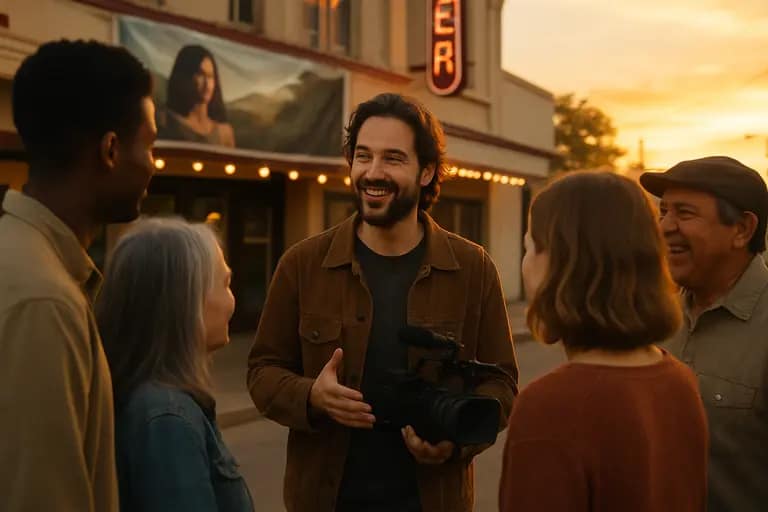
Confirmed: the planned 2027 in-person showcase in Raton, New Mexico, was presented as the first event in a rotating annual town format across the American West. This is a meaningful distinction. A festival anchored permanently in one city can build deep local habits, but a rotating model can share attention across multiple towns. It can also test how film culture functions outside the largest production centers and the most established festival destinations.
Market analysis: if executed with consistency, a rotating-town model can make regional film culture feel less extractive. Instead of using the West mainly as a brand or visual backdrop, the event can bring screenings, conversations, and visiting filmmakers into different local settings. That said, the model also carries practical questions. Travel, venue partnerships, local promotion, audience education, and volunteer capacity can vary from town to town. The research supplied confirms the intention but does not yet show how those operational issues will be handled after the Raton event.
Reviewed: for readers tracking independent film culture across adjacent coverage spaces, Noir Whale provides a similar perspective by examining how smaller media outlets cover niche cinema and foster audience engagement without relying solely on high-profile studio releases.
Accessibility And Online Availability
Confirmed: the festival’s rules allow already public films and require embedded English subtitles for non-English work. English-language captions are encouraged rather than required. For independent filmmakers, that distinction matters. A required caption policy can improve access but may add cost or labor for small teams. An encouraged policy signals accessibility as a value while stopping short of making it an absolute submission condition for English-language work.
Market analysis: accessibility also shapes audience engagement. A festival that accepts public online work may reach filmmakers who have already built small viewer communities. That can help bridge online discovery and in-person programming. It may also reduce the prestige signal attached to premiere status, which some filmmakers still see as a route to press coverage or distributor attention. The trade-off is clear: openness can increase participation, while reduced exclusivity may require the festival to work harder to define the value of selection.
American West Film Fest And Regional Film Identity
Market analysis: the early identity of this festival rests on three confirmed choices: a 21st-century eligibility cutoff, a monthly awards rhythm, and a planned rotating town showcase. Together, those choices present regional cinema as a living practice rather than a nostalgia category. The American West on screen is not limited to period Westerns or familiar iconography. It can include present-day fiction, documentary, low-budget experimentation, genre work, and new production tools.
Reviewed: the evidence supports reading American West Film Fest as a new organization testing a flexible model for regional film recognition. It is too early to judge its long-term cultural effect. The available research does not provide audience numbers, submission totals, filmmaker background data, jury details, or post-award distribution outcomes. Those missing details matter because festival value is measured not only by rules but by what happens after selection: who sees the films, how filmmakers use the recognition, and whether local audiences feel represented rather than simply addressed.
Opinion: the festival’s strongest idea is its refusal to treat regional storytelling as one format. By recognizing genre work, budget-conscious filmmaking, online-available projects, and short-form experimentation, it creates space for filmmakers who may not fit conventional prestige pathways. Its long-term credibility will depend on transparent selection practices, steady communication, and the quality of the annual showcase after the December 31, 2026, winners are announced. For now, the confirmed record points to a young festival trying to connect regional identity with broader access, rather than one already proven by years of audience response.